Ask any child what he wants to be when he grows up and the answer is often the same.
“Truck driver!”
“Doctor!”
“Firefighter!”
“Police officer!”
When kids see a constable in uniform, they tend not to distinguish between different classes of law enforcement officers. To them, they’re all “police.”
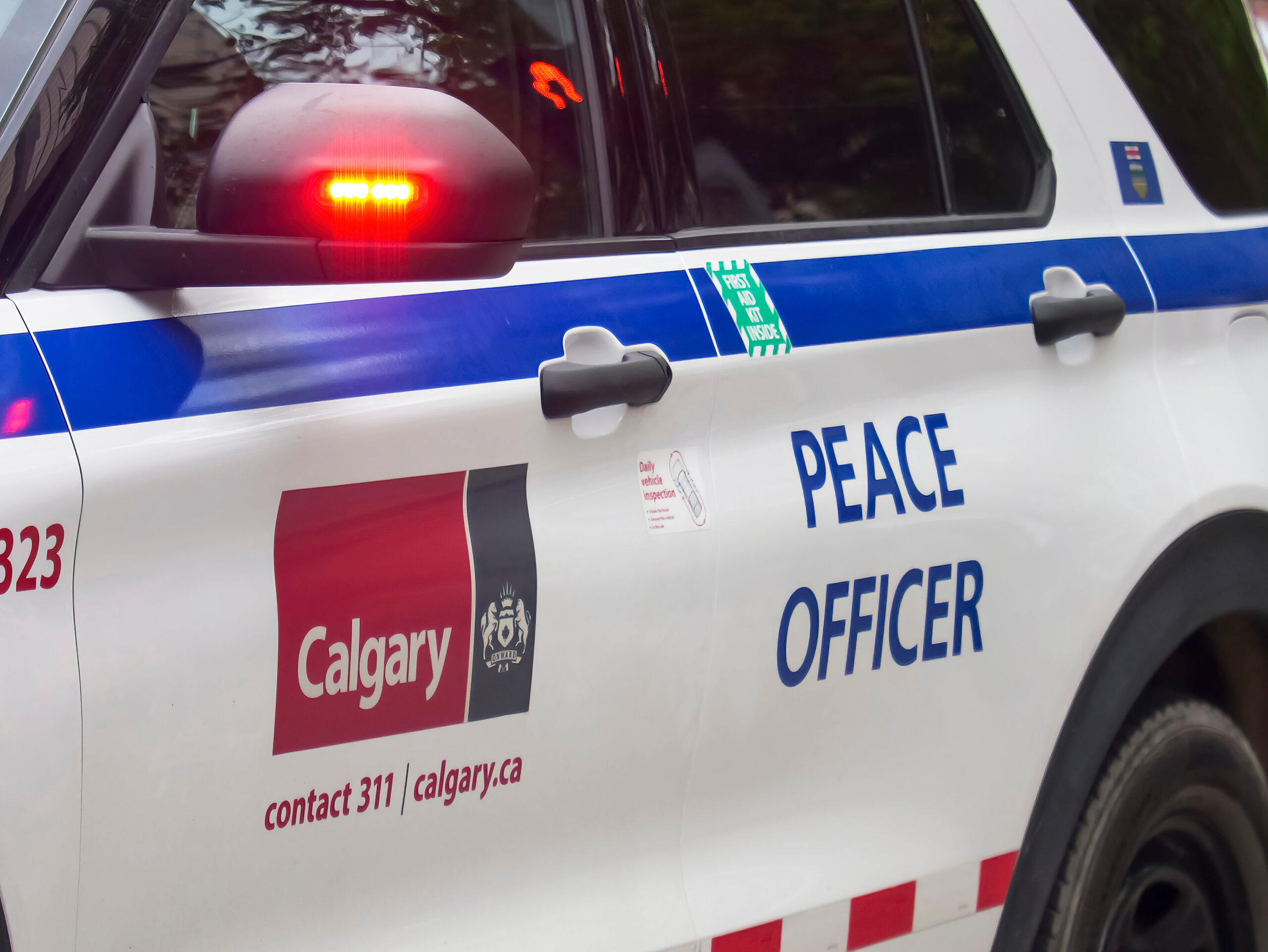
But have you ever seen a vehicle marked “Peace Officer” and wondered what those words meant? If so, you’re not alone.
Here’s a hint: it has nothing to do with whether the officer carries a weapon. And, no, it doesn’t mean they’ll join hands with you and sing Kum ba yah if you’re caught speeding.
So, what’s the difference between police officers and peace officers? And does the difference actually matter?
The legislative framework
According to section 2 of Canada’s Criminal Code, a federal statute, a peace officer includes “a police officer, police constable, bailiff, constable, or other person employed for the preservation and maintenance of the public peace.”1 It also includes various other public servants, such as sheriffs, prison wardens, justices of the peace, and certain elected officials like the mayor.
Clear enough, right?
Things start to get murky, however, when you look at the provincial level. Under Alberta’s Police Act, for example, “’peace officer’ means a person employed for the purposes of preserving and maintaining the public peace.”2 If you think Alberta copied this language from the feds, you’d be right. The Code has been around since 1892—a full 13 years before Alberta was carved out of the Northwest Territories—and the section defining “peace officer” is just as old.3
It is a longstanding principle of statutory interpretation that the legislature in one province is presumed to have had prior notice of how judges interpreted legal words and phrases in other Canadian jurisdictions. Copying the language from the much-older Criminal Code definition of peace officer was thus a deliberate choice, clearly intended to eliminate any doubt that police appointed in Alberta should have all the duties, powers, and immunities granted to peace officers under the Criminal Code. This is consistent with section 38(1) of the Police Act, which states:
38(1) Every police officer is a peace officer and has the authority, responsibility and duty
- to perform all duties that are necessary
- to carry out the police officer’s functions as a peace officer,
- to encourage and assist the community in preventing crime
- to encourage and foster a co‑operative relationship between the police service and the members of the community, and
- to apprehend persons who may lawfully be taken into custody,
and- to execute all warrants and perform all related duties and services.4
Not surprisingly, all of the duties listed in section 38(1) are subjects covered by the Criminal Code.

But while all police officers are peace officers, not all peace officers are police officers. In 2006, Alberta created a separate statutory regime to appoint, empower, and regulate a distinct class of peace officers. They are typically described as Community Peace Officers, although they may also carry titles like Sheriff, Transit Officer, or Fish and Wildlife Officer.
No matter their name, unlike police, these peace officers derive their authority from the Peace Officer Act. That Act defines “peace officer” significantly differently than the Criminal Code and the Police Act. Section 7(5) states, “Subject to the terms of the appointment, a person appointed as a peace officer under this Act is a person appointed for the purposes of preserving and maintaining the public peace.”5 In other words, while police count as “peace officers” for all intents and purposes under the Criminal Code, Community Peace Officers will not necessarily—and do not generally—count as “peace officers” under the Code, unless the terms of their appointment specifically authorize them to enforce the criminal law or to follow the Code‘s criminal procedure in the enforcement of summary provincial offences.6 The mere fact that Community Peace Officers share the label of “peace officer” with their police brethren and the mayor no more entitles them to carry a gun than it entitles them to preside over city council meetings. In each case, their weapons and powers depend on their individual terms of appointment, which may vary not only from one employer to the next but also from one peace officer to the next.
An example helps to illustrate the point. In R v Sevigny,7 an Edmonton Transit Peace Officer was charged and convicted of causing bodily harm to a man whose head struck the pavement violently during an arrest for jaywalking. Officer Sevigny’s terms of appointment had read in part:
Article 1. Authority, Responsibility and Duties
1.107 Subject to section 1.2, the person appointed under this document has the authority, while employed by the City of Edmonton, Transit System (ETS) and while acting within the scope of his/her employment, to enforce the following legislation and all regulations thereunder, and serve court documents relating to:
- THE ENVIRONMENTAL PROTECTION AND ENHANCEMENT ACT, PART 9, DIVISION 2
- THE GAMING AND LIQUOR ACT
- THE PETTY TRESPASS ACT
- THE PREVENTION OF YOUTH TOBACOO [sic] USE ACT
- THE PROVINCIAL OFFENCES PROCEDURE ACT
- THE TOBACOO [sic] SMOKING REDUCTION ACT
- THE TRAFFIC SAFETY ACT [and]
- THE TRESPASS TO PREMISES ACT
At trial, there was some debate as to whether Officer Sevigny was acting under the authority of the Provincial Offences Procedure Act or the Traffic Safety Act.8 Either way, Officer Sevigny was authorized to enforce offences under both of those enactments. Because it is a summary offence, jaywalking did not automatically entitle the officer to arrest this man without a warrant; however, if the officer reasonably believed the arrest was necessary to establish the individual’s identity, then he’d have been entitled to make a lawful, warrantless arrest for that purpose.9 In this case, the court held that the arrest was unlawful—not because the officer could never make a lawful arrest or because the offence was outside the scope of his authority, but because it was not reasonable for him to believe the arrest was necessary to identify the man in this particular situation. In fact, the officer had failed to request the man’s identification before moving to arrest him.
What this case shows is the importance of the scope of each peace officer’s unique terms of appointment. Had Officer Sevigny not been expressly authorized to enforce the Traffic Safety Act or the Provincial Offences Procedures Act, he would not have been able to argue he was acting under those statutes’ lawful authority.

In the Public Security Peace Officer Program Policy and Procedures Manual, the Government of Alberta emphasizes the specific limitations placed on peace officers under the Peace Officer Act. On page 9, it states:
It is extremely important to note that a peace officer’s authority is limited by the first part of section 7(5) which limits their status as peace officers to the performance of duties specified on their appointment. Any action taken that is not specifically covered by the peace officer appointment would be as a private citizen.
Following that logic, peace officers who witness or learn of an offence under a statute that is not listed on their terms of appointment would have to refer the complaint to local police. If, instead, they made an arrest, then they could be held personally and civilly liable for the torts of assault, battery, and false imprisonment, subject only to the defences that are available to anyone who conducts a private citizen’s arrest.10 Put differently, on the Government’s view, a peace officer bears all the risk of being wrong about the extent of her authority.
The reality is more nuanced.
The public safety–rights dilemma
Alberta’s rationale for creating a subclass of peace officers is that it effectively frees police to investigate more serious crimes, while giving peace officers an arrest power that ordinary bylaw officers lack. It also enables municipal governments to address specialized law enforcement needs without the expense of hiring and training more police officers. Yet this attempt to make “mini” Mounties presents unique practical and legal challenges.
Consider this hypothetical-but-plausible scenario: a Community Peace Officer, whose terms of appointment include the enforcement of moving violations under the Traffic Safety Act, sees a car speeding. She activates her cruiser’s lights and conducts a roadside traffic stop. In the course of her investigation pursuant to that Act, the driver punches her through the open driver’s-side window. Now, the officer finds the driver committing a criminal offence—namely, assault.11 Because this peace officer is not a police officer and does not derive her power from the Criminal Code, the Alberta Government would argue she has no authority to detain or arrest the driver for the assault, other than as a private citizen, and would have to report the incident to police.12
By the time police arrive on scene—if they arrive on scene at all—the assailant might have fled. So, the peace officer in our hypothetical scenario is faced with a stark choice: arrest her attacker and risk personal liability for an arrest that is unlawful in some respect,13 call for backup and hope that police get there in time to enforce the criminal law, or, in the extreme, do nothing.
None of these is a particularly good option if you’re the officer that has just been attacked.
This approach minimizes the Government’s exposure to tortious liability for a peace officer’s conduct, but it does not fundamentally alter the state’s liability under the Canadian Charter of Rights and Freedoms. Although the Charter typically applies to the actions of public bodies and their agents and not to private individuals,14 the Alberta Court of Appeal has repeatedly held that a private citizen who arrests another is exercising a “specific public function” effectively delegated to him by the state.15 As a result, it is open to a defendant in a criminal prosecution to claim that the arrest violated his rights under the Charter, no matter whether the peace officer was acting inside or outside the scope of her appointed authority at the time. Because a judicial finding that an individual’s rights were violated often leads a factually guilty person to walk free,16 this means there are distinct public safety consequences whenever an arrest is made unlawfully.
Would a Community Peace Officer be less likely to make an unlawful arrest if she were imbued with the full authority of a police officer? It’s a valid question. Community peace officers are often subject to the same dangers as police but without the same powers to do something about it. One could argue that both officer and public safety would be better served if all officers were trained and empowered equally. Their actions would more likely comply with the Charter if for no other reason than that they’d possess more authority under the Criminal Code; they would not be kneecapped by the legislature as they are now.
On the other hand, there is no shortage of examples where police officers have abused their authority. So, it is far from obvious—unlikely, even—that giving all peace officers police powers would solve the dual public safety and individual rights dilemmas created by the current regime. On the contrary, it is reasonable to infer that maintaining a subclass of specialized peace officers reinforces the need for all agents of the state to exercise caution, if not restraint, in the performance of their specific public duties.

The takeaway
Regardless of where you fall on the peace officer debate, public policy is about choices. To be sure, those choices have consequences, but they are guided by political values. The current legislative scheme governing peace officers treats agents differently depending on who employs them and what public purpose(s) they are meant to serve. The effect of doing so is arguably to prioritize economic efficiency, institutional restraint, and professional specialization over seamless law enforcement. However, that does not render Alberta’s choice of approach necessarily dysfunctional or unreasonable.
Moreover, nothing about Alberta’s style of nomenclature is inherently offensive to the Constitution. One might think that the Criminal Code‘s definition of “peace officer” should trump the Peace Officer Act‘s use of that term, following the constitutional law doctrine of federal paramountcy. Yet, despite that argument’s superficial appeal, it quickly falls apart when you understand the limited scope of that doctrine and Canada’s history of flexible federalism. Federalism makes thirteen laboratories out of the provinces and territories. Subject only to the Constitution, they are free to experiment and to pursue the policies and program delivery models that suit their unique circumstances and objectives. So, although some will find it confusing to give Community Peace Officers the “peace officer” moniker while denying them full “peace officer” status under the Code, that does not make it unconstitutional. More than one government may validly legislate on different aspects of a single subject, like law enforcement, where they are connected to both federal and provincial heads of power.17 You can imagine an alternate scenario in which Alberta had called these officials something other than peace officers (Ontario’s decision to call them POOs is equally unfortunate18); still, the legislature could grant them partial police- or peace officer-like powers in certain prescribed situations and not in others. Doing so neither frustrates a federal purpose nor renders simultaneous compliance with federal and provincial law impossible.19
Outside Alberta, it means having to explain law enforcement in that province is done differently. Inside Alberta, it means many classes of officer may keep the peace.
Just don’t call them all “police.”
- Emphasis added. ↩︎
- Emphasis added. ↩︎
- The Criminal Code, 1892, 55-56 Victoria, c 29, s 3(s). ↩︎
- Emphasis added. ↩︎
- Emphasis added. ↩︎
- See e.g. Provincial Offences Procedures Act, RSA 2000, c P-34, s 3. ↩︎
- R v Sevigny, 2019 ABPC 81. ↩︎
- It is arguable whether Officer Sevigny could have been enforcing Edmonton Traffic Bylaw 5590, s 59(2), or any number of rules under the Use of Highway and Rules of the Road Regulation (Alta Reg 304/2002). ↩︎
- Generally, a peace officer may arrest anyone s/he “finds committing” an offence: Criminal Code, RSC 1985, c C-46, s 495(1)(b). However, if the offence is one for which the accused would be liable to summary conviction only, then the officer must not arrest the individual without a warrant unless it is in the public interest to do so: s 495(2). There are four main situations in which it may be in the public interest to effect a warrantless arrest: when it is necessary to establish the person’s identity, to secure or preserve evidence of the offence, to stop the continuation or repetition of the offence, and to ensure the accused attends court: s 495(2). These arrest rules were presumably incorporated into Officer Sevigny’s terms of appointment by virtue of the Provincial Offences Procedure Act, supra note 6; however, the judge in his case relied on analogous powers of arrest in the Traffic Safety Act, RSA 2000, c T-6, ss 166(1)(b), 166(4), 169(1), 169(2)(p). ↩︎
- Code, supra note 9, s 494. ↩︎
- Ibid, s 265. ↩︎
- For an example of how this might look in practice, see R v Whyte, 2021 ABPC 326 at paras 90-92. ↩︎
- Depending on the circumstances, she might use disproportionate force or the arrest might not be authorized by law if, for example, she did not have reasonable grounds for the arrest. ↩︎
- See Canadian Charter of Rights and Freedoms, Part I of the Constitution Act, 1982, being Schedule B to the Canada Act 1982 (UK), 1982, c 11, s 32(1). ↩︎
- Another way of thinking about this is that the power of arrest is a prerogative reserved to the Crown. That private individuals and police officers have been granted authority to conduct such arrests does not by itself change the nature or legal source of the arrest power: see R v Dell, 2005 ABCA 246 at paras 10-19, citing R v Lerke, 1986 ABCA 15. It is worth noting that Alberta is an outlier in the federation in adopting this approach. For instance, courts in British Columbia, Ontario, and Nova Scotia have expressly rejected the Charter‘s application to a private citizen’s arrest: see Dell at para 12. More recently, Judge Agnew of the Saskatchewan Provincial Court articulated several reasons why Alberta’s application of the Charter to private citizens’ arrests might be problematic: R v Custer, 2023 SKPC 33. ↩︎
- Although it is theoretically possible to also sue the government—usually, in the case of a municipally-employed peace officer, the city or county—for damages under section 24(1) of the Charter, the bar to winning such relief is steep: see e.g. Canada, Department of Justice, Charterpedia at “Section 24(1) – Remedies,” accessed 19 Apr 2025. Dismissing charges or excluding evidence are more common remedies. ↩︎
- In this case the federal government’s “Criminal Law” power and the province’s jurisdiction over the “Administration of Justice in the Province”: ss 91(27), 92(14). For more on the so-called “double aspect” doctrine, see e.g. Canadian Western Bank v Alberta, 2007 SCC 22 at para 30 [CWB]. ↩︎
- Note that Ontario’s Provincial Offences Officers are not carbon copies of Alberta’s Peace Officers. They have their own unique definition which, significantly, includes officials that Alberta would call Community Peace Officers but which is also broad enough to include police: see Provincial Offences Act, RSO 1990, c P.33, s 1(1). ↩︎
- See e.g. CWB, supra note 17 at paras 69-75. ↩︎
Discover more from Agathon Fric
Subscribe to get the latest posts sent to your email.
